
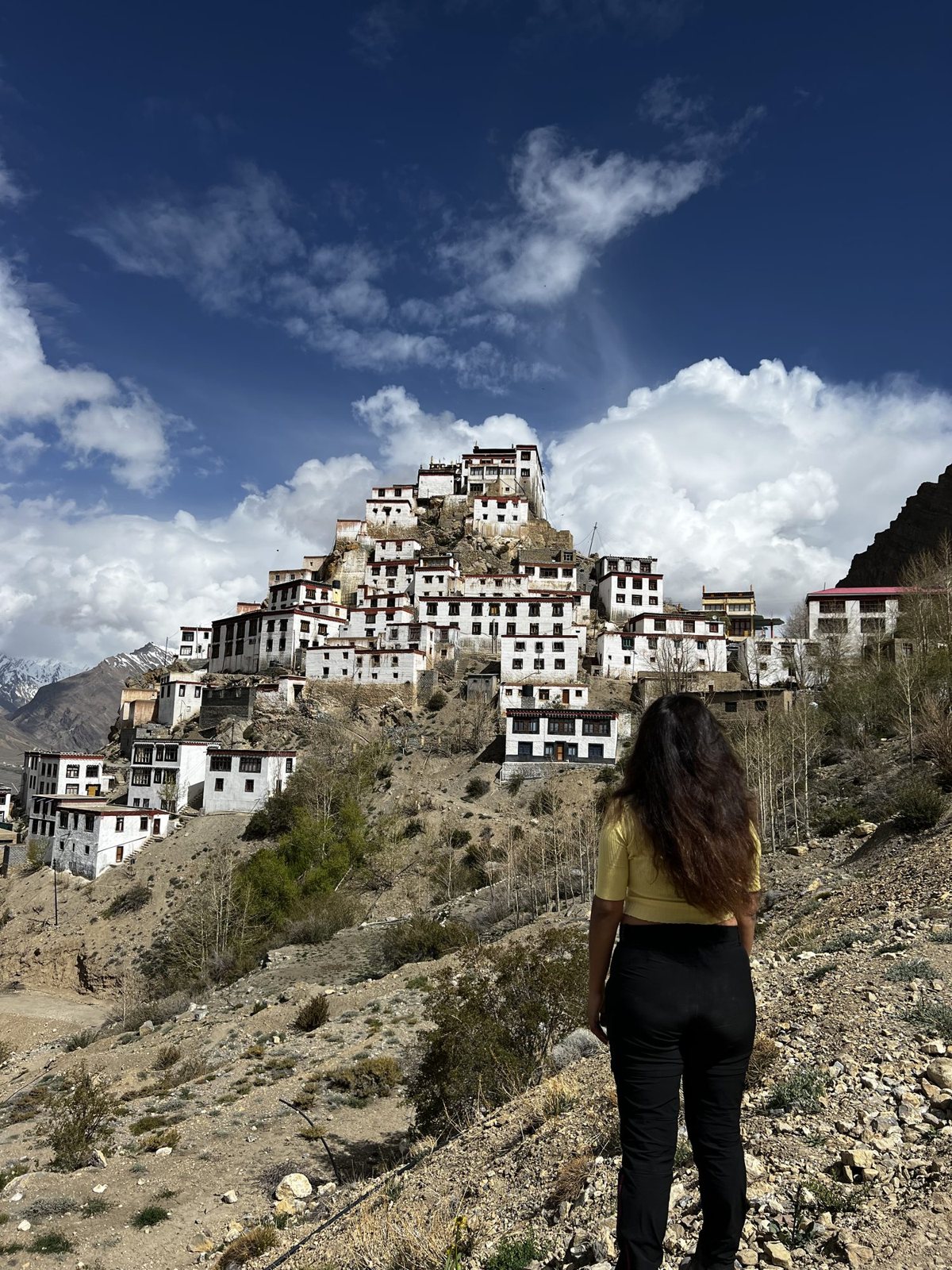
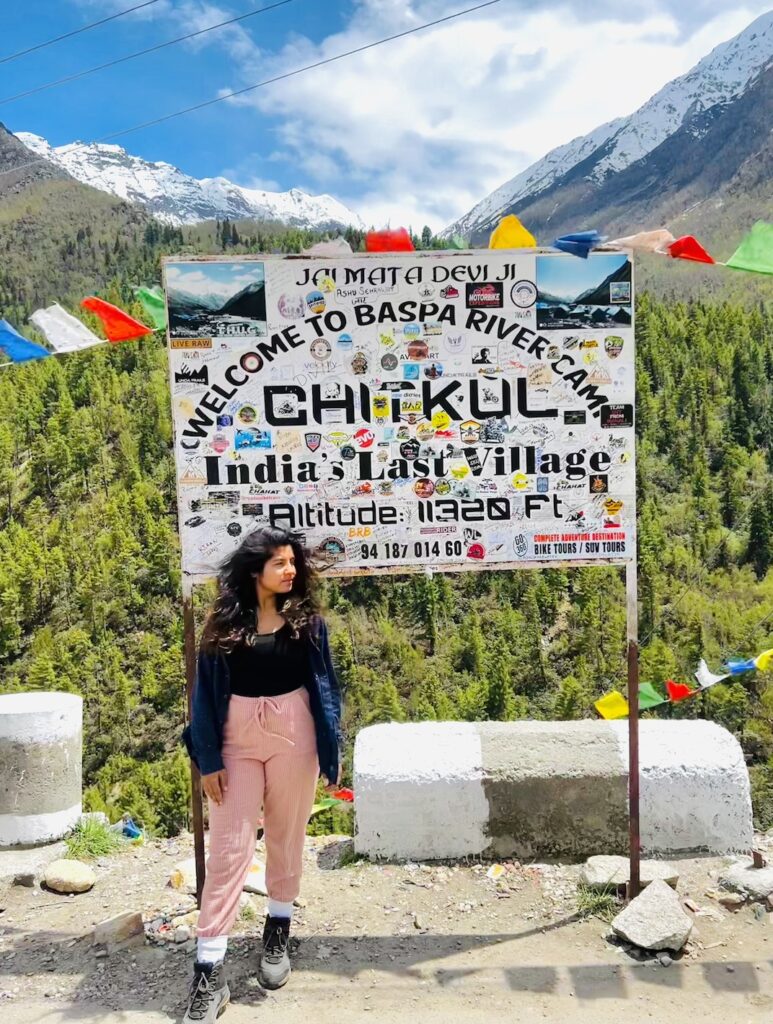
It was somewhere past midnight in Chitkul, the last village on the Indo-Tibet road in Kinnaur, when my husband Biren woke up shivering so hard he couldn’t feel his toes. My father-in-law and I weren’t far behind. Three of us, huddled in a tiny tent beside the Baspa river, wearing every layer we owned — and still freezing.
That was night one of our Spiti trip. Over the next two weeks we would travel the entire Kinnaur–Spiti circuit on local HRTC (Himachal Road Transport Corporation) buses, sleep in a tent we carried on our backs, borrow blankets from villagers, drink chai offered by strangers, and make friends with a bus crew who knew every curve of the most dangerous roads in India.
If you’re searching for how to do Spiti Valley by bus, which buses go to Spiti, or whether a Spiti trip on public transport is actually possible — it is. Here’s exactly how we did it, what it cost, and what we’d change next time.
Quick answer: Can you do Spiti Valley by bus? Yes. HRTC runs ordinary buses from Shimla to Reckong Peo and on to Kaza, plus village buses to Chitkul, Sangla, Nako, Tabo, Mudh, Losar and more. From Delhi, take an overnight bus to Shimla, then hop HRTC buses village to village. Fares are mostly ₹30–₹450 per ride, and you can do the whole Spiti circuit for a fraction of a taxi’s cost.
Our Spiti bus route at a glance (June 2023)
| Day | Route | How | Night stay |
|---|---|---|---|
| 1 | Hyderabad → Delhi | Telangana Express (3AC) | Train |
| 2 | Delhi (shopping) → Shimla | Private Volvo, booked on redBus | Bus |
| 3 | Shimla → Karcham bridge → Sangla → Chitkul | HRTC buses | Tent, Chitkul |
| 4 | Chitkul | Explored the village | Tent, Chitkul |
| 5 | Chitkul → Rakcham | HRTC bus | Tent at a campsite, Rakcham |
| 6 | → Nako | HRTC bus | Tent, Nako |
| 7 | → Tabo | HRTC bus | Tent, Tabo |
| 8 | → Chango | HRTC bus | Tent, Chango |
| 9 | → Kaza | HRTC bus | Tent, Kaza |
| 10 | Hikkim, high villages & Chicham Bridge | Local taxi from Kaza | Tent, Kaza |
| 11 | Kaza → Mudh (Pin Valley) | HRTC bus | Tent, Mudh |
| 12 | Mudh → Kaza → Losar | HRTC buses | Tent, Losar |
| 13 | Losar → Kunzum Pass → Manali | Hitchhiked! | Manali |
| 14–15 | Manali → Delhi → Hyderabad | Bus + train | — |
Getting there: Hyderabad to Delhi to Shimla
We started with the Telangana Express (12723), which leaves Hyderabad Deccan (Nampally) at around 6:00 AM and reaches New Delhi the next morning — roughly 26 hours and about 1,680 km. We travelled in 3AC for about ₹1,500 each. Long train journeys are their own kind of holiday: chai at every stop, the landscape changing from Deccan plateau to the plains of the north, and plenty of time to plan. (If you love long train rides too, read how I went from Hyderabad to Kashmir by train for under ₹1,700.)
We reached Delhi in the morning and spent a few hours picking up last-minute things for the mountains. That evening we boarded a Delhi to Shimla Volvo (a private operator, booked on redBus, around ₹1,100 per person) and were dropped in Shimla at about 7:30 AM the next day.
Tip: HRTC also runs its own Delhi–Shimla buses, including Volvos, from ISBT Kashmere Gate — handy if you want to stay “all HRTC”.
Shimla to Chitkul by HRTC bus
From Shimla we took an HRTC bus heading up the Hindustan–Tibet road towards Reckong Peo and got off at the Karcham bridge — the turn-off for the Sangla (Baspa) valley. From there, a second local bus took us up to Sangla, and a third to Chitkul.
If you’d rather not switch buses, HRTC also runs a morning bus from Shimla straight to Sangla, and a direct Shimla–Chitkul ordinary bus that leaves Shimla’s Tutikandi bus stand early in the morning and arrives by evening. It’s a long day, but the views of the Sutlej and then the Baspa valley make up for every bump.
The night we almost froze in Chitkul
Here’s what we carried for the whole trip: a tent, sleeping bags, a couple of blankets, our clothes, some dry snacks, homemade poha and homemade almond powder to mix into milk. That’s it. We refilled water wherever we went.
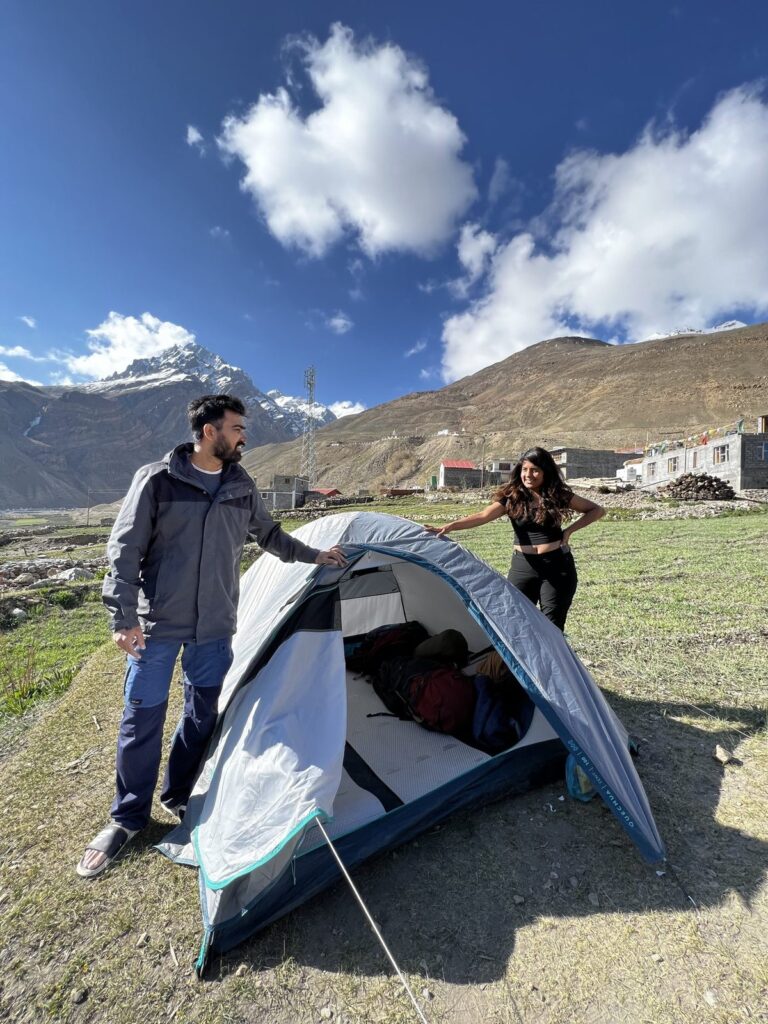
In Chitkul we pitched our tent across the river, delighted with the spot. What we didn’t know about June in the high mountains: next to a river the wind is relentless, and the ground stays icy cold. That cold seeped straight through the floor of the tent and into our bodies.
Around midnight, with Biren shivering beside me and none of us able to sleep, I had an idea: empty every bag and spread all our clothes across the base of the tent, so they’d act as a mattress between us and the frozen ground. We were already in four layers; we pulled on four or five more. Slowly, a little warmth came back.
It was terrifying in the moment. Today it’s the story we tell most often — the night three of us learned, the hard way, that mountains don’t care how excited you are.
Rakcham, and the lesson that saved our trip
The next morning we caught a bus to Rakcham, often called one of the cleanest villages in Himachal. This time we didn’t take chances. We found a small campsite that already had tents set up, paid them around ₹400–₹500 to pitch ours for the night, and got access to washrooms.
And we asked for blankets. The owners handed us thick, heavy Himachali blankets — the kind that make you feel like you’re sleeping under a warm hug. That night our tent was cosy for the first time.
That became our system for the rest of the trip: in every village we’d politely ask a family to lend us blankets for the night, and return them first thing in the morning. Not once did anyone say no.
How the Spiti village buses work
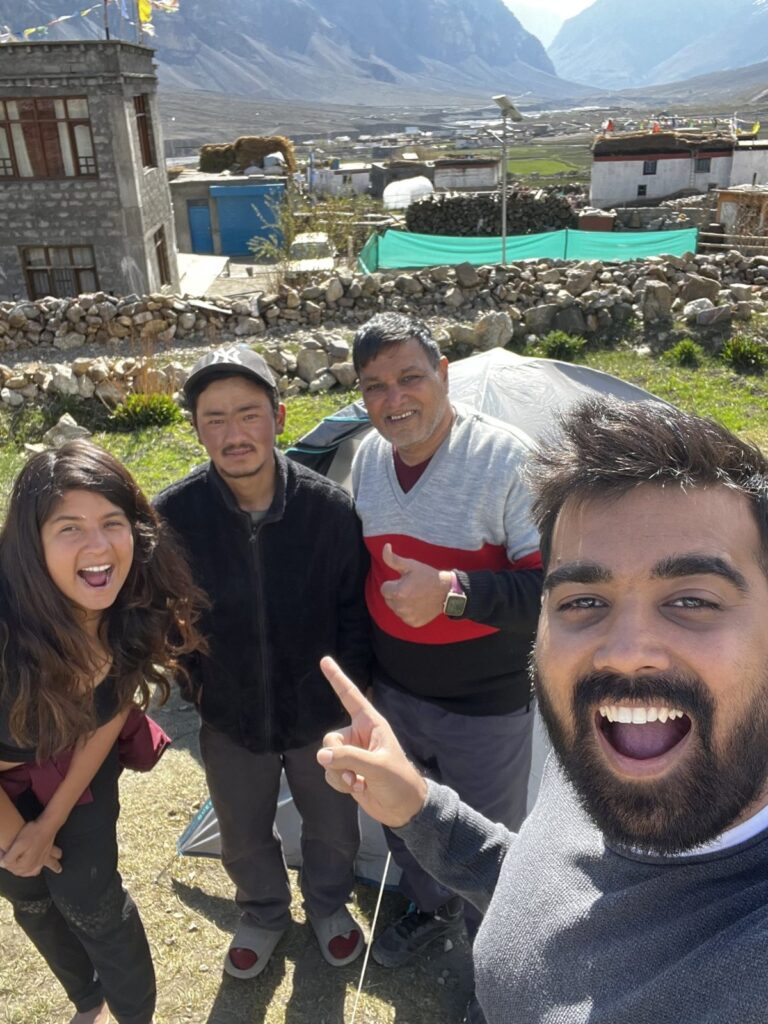
This is the part that turned a trip into the experience of a lifetime. The HRTC buses running out of Reckong Peo serve the villages along the route — some halt overnight at a village and leave again early the next morning. We simply travelled with the bus: get off at a village, explore, camp, and board the next morning’s bus to the next village.
For 7–8 days we hopped village to village like this:
- Nako — a lake village of stone houses and prayer flags, with mountain views all around
- Tabo — home to one of the oldest Buddhist monasteries in the Himalayas, quiet and timeless
- Chango — a small, green village in the Hangrang valley that hardly any tourists stop at
- Kaza — the main town of Spiti, where we stayed two nights
Travelling by local bus means you never travel past a place — you arrive in it. Schoolkids, monks, farmers carrying sacks, aunties going to visit relatives: the bus is how Spiti moves, and you become part of it.
Our HRTC crew: a Hollywood conductor and a fearless driver
Our favourite people on this trip were the driver and conductor of our bus.
The conductor could easily have walked onto a Hollywood film set — piercing blue eyes, a sharp jawline, fair skin and a strong build. My husband and I kept joking that if a casting director ever rode this route, he’d be discovered on the spot.
The driver was soft-spoken, polite, and astonishingly skilled. On Spiti roads there’s a wall of rock on one side and a sheer drop — a khai — on the other. Move a wheel an inch the wrong way and there is no second chance. Locals told us that only the most experienced HRTC drivers are trusted with these routes, and watching him handle hairpin bends and broken stretches with calm hands, we believed it completely.
More than anything, they looked after us. They told us where to pitch our tent, where to find good food, and which villages deserved more time. Half of what made our trip special came from their advice.
Kaza, Hikkim and the highest villages in the world
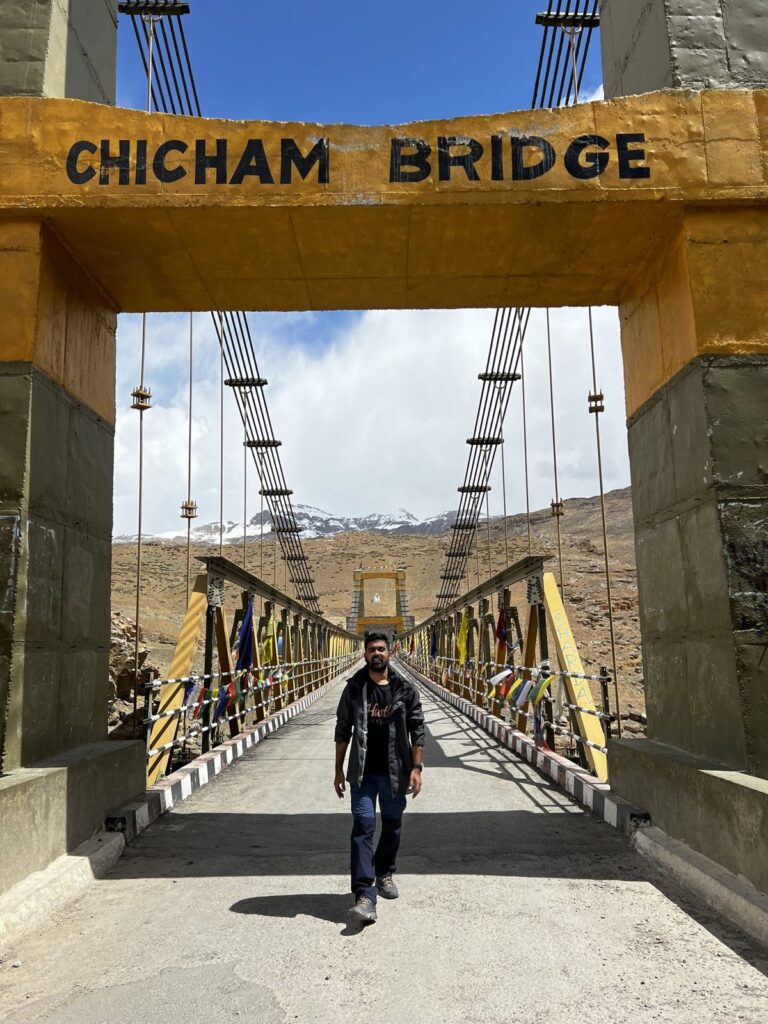
From Kaza we hired a local taxi for a day to visit the high-altitude villages, including Hikkim, home to what’s known as the world’s highest post office (we sent postcards!), and the Chicham Bridge, one of the highest bridges in Asia, hanging over a gorge that makes your stomach drop. Then it was back to Kaza for the night.
Mudh village, Pin Valley
Next, an HRTC bus took us from Kaza into Pin Valley to Mudh, the last village on the road. After Spiti’s stark brown mountains, Pin Valley feels unexpectedly green — fields, a river, snow peaks, and silence. If you want to disconnect, this is the place: there was no mobile signal at all when we visited.
Losar and the chai girl
Our last village was Losar, near the start of the road towards Kunzum Pass. We camped there, and the next morning a few villagers walked towards our tent carrying tea. We assumed they were taking it to a relative’s house. They weren’t — the tea was for us.
That’s Himachal. People here genuinely won’t let you pass their home without a cup of chai. Of all the moments on this trip, the girl from Losar handing us steaming tea on a cold morning is the one I’ll carry with me forever.
Hitchhiking from Losar to Manali over Kunzum Pass
We’d planned to take a bus from Kaza to Manali, but the Kunzum Pass road hadn’t opened for buses yet — it usually opens only once the winter snow has melted and the road is safe (HRTC’s Kaza–Manali buses typically run from around mid-June to mid-October). There are no taxis to hire in Losar, either; if you need one to Manali, book it in Kaza.
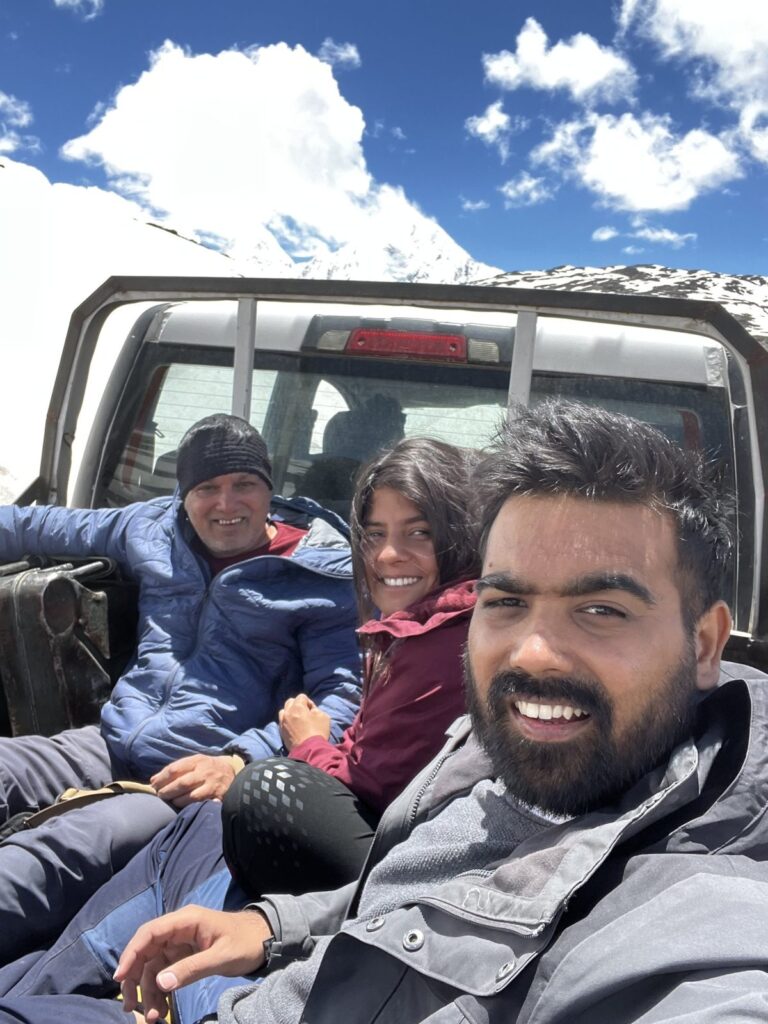
So we stood by the road and hitchhiked. An Isuzu pickup stopped — two mechanics from Leh, following a group of foreign travellers riding Royal Enfields through Spiti, ready to fix any bike that broke down. They took the three of us all the way to Manali and refused to take a single rupee.
That drive was unreal: what felt like twenty waterfalls in one stretch, snow walls close enough to touch, and the climb over Kunzum Pass (about 4,550 m) before descending towards Manali. A free ride and one of the most beautiful roads of our lives.
What we ate: rajma chawal and momos
We carried instant and homemade poha, so breakfast was always sorted. For lunch and dinner we ate at local dhabas — about ₹200 a meal.
The star was rajma chawal. Kinnauri rajma is famous, and locals swear it’s the best in India. After a cold day on the road, a plate of it tasted like heaven. Spiti also does excellent momos. And if you’re vegetarian like us, don’t worry at all — with a large Buddhist and Hindu population across Kinnaur and Spiti, vegetarian food is everywhere.
Doing Spiti with a parent in his 60s
My father-in-law is in his 60s, and he loved every minute of it. He does yoga and goes to the gym regularly, and that fitness made a huge difference at altitude and on long bus days. If your parents are active, don’t assume Spiti is out of reach for them — it may become their favourite trip too. It certainly became his.
Spiti trip cost by bus: our full budget
This was a genuinely low-cost trip because we camped, carried basic food and refilled water. Per-person costs below are what we spent in June 2023. Since prices have risen, we’ve added an estimate for 2026–27 (+25%).
| Expense | 2023 cost (per person) | 2026–27 estimate (per person) |
|---|---|---|
| Hyderabad → Delhi, Telangana Express 3AC | ₹1,500 | ₹1,900 |
| Delhi → Shimla Volvo (redBus) | ₹1,100 | ₹1,400 |
| HRTC local buses, ~10 travel days (₹300–400/day) | ₹3,500 | ₹4,400 |
| Kaza local taxi day (shared by 3) | ~₹1,300 | ~₹1,600 |
| Food, lunch + dinner (~₹400/day × 11 days) | ₹4,400 | ₹5,500 |
| Campsite fee (one night, Rakcham, per tent ~₹450) | ~₹150 | ~₹200 |
| Losar → Manali (hitchhiked) | ₹0 | — |
| Manali → Delhi bus | ~₹1,200 | ~₹1,500 |
| Delhi → Hyderabad train 3AC | ₹1,500 | ₹1,900 |
| Total (approx.) | ~₹14,650 | ~₹18,400 |
Staying in homestays instead of camping? Add your nightly homestay rate per person — and in our opinion, it’s worth it (see below).
HRTC buses for Spiti: routes, timings and fares
Timings change with season and roads, so always confirm at the bus stand the day before. Fares below are approximate.
| Route | Usual departure | Approx. fare |
|---|---|---|
| Shimla → Reckong Peo | Several buses, early morning onwards | ~₹420 |
| Shimla → Sangla | ~6:30 AM | ~₹350–400 |
| Shimla → Chitkul (direct) | ~6:15 AM, Tutikandi ISBT | ~₹400–450 |
| Karcham → Sangla / Chitkul | Local buses through the day | ~₹35 / ~₹70 |
| Reckong Peo → Kaza (via Nako, Tabo) | Early morning (~5:30–7:30 AM) | ~₹450 |
| Kaza → local villages (Langza, Hikkim, Komic etc.) | Afternoon village buses | ~₹30–50 |
| Kaza → Mudh | ~4:00 PM (returns ~6:00 AM) | ~₹70–100 |
| Kaza → Manali (via Losar, Kunzum Pass) | Early morning, ~mid-June to mid-Oct only | ~₹350–400 |
3 things we’d do differently
- Stay in homestays instead of camping. Finding a safe spot to pitch the tent cost us a couple of hours every single day, plus more time packing it up each morning. With homestays, you get off the bus, drop your bag and spend those hours talking to people, walking the village and understanding the culture — and you sleep without worrying. Packing a rucksack takes minutes; packing a tent doesn’t.
- Carry less food. We packed for remote places with nothing to eat. In reality, food is available in almost every village on this route. Carry a few snacks, not a pantry.
- Don’t panic about network. Years ago Spiti was mostly offline. Today Kaza and most of the bigger villages have signal (BSNL is the most reliable), though Pin Valley/Mudh, Hikkim, Langza and Komic are still patchy or have none. Download offline maps and tell family when you’ll be out of reach.
Packing list for Spiti by bus
- Warm layers: thermals, fleece, down jacket, woollen cap, gloves, warm socks
- Rain jacket or windcheater
- Sleeping bag rated for near-freezing temperatures if you plan to camp
- Dry snacks, instant poha, oats or nut powder
- Reusable water bottle (and purification tablets)
- Sunscreen, lip balm, sunglasses — the high-altitude sun is harsh
- Basic medicines, including for altitude sickness (ask your doctor)
- Cash — ATMs are few beyond Reckong Peo and Kaza
- A BSNL SIM as backup, and offline maps
- Patience. Buses run on mountain time.
FAQs: Spiti Valley by bus
HRTC ordinary buses run from Shimla to Reckong Peo and from Reckong Peo to Kaza, with local buses to villages like Chitkul, Nako, Tabo and Mudh. In summer, HRTC also runs Manali–Kaza buses once Kunzum Pass opens.
Take an overnight bus from Delhi to Shimla (HRTC or private Volvo), then HRTC buses from Shimla to Reckong Peo and on to Kaza. Many travellers break the journey at Sangla/Chitkul and Kalpa to acclimatise.
The trip effectively takes two days with a night halt around Reckong Peo. Plan for an overnight stop rather than a single run.
We spent about ₹14,650 per person in 2023 for 15 days from Hyderabad, camping. For 2026–27, budget around ₹18,000–19,000 per person, plus accommodation if you choose homestays.
Yes, if they’re reasonably fit. HRTC drivers on these routes are highly experienced, and locals are incredibly helpful. Go slow and give your body time to adjust to the altitude.
June to September, when both the Shimla and Manali routes are usually open. June nights are still freezing — pack accordingly.
The road that changed how we travel
We could have hired a taxi. We’d have seen the same mountains. But we’d never have met a conductor with Hollywood eyes, slept under borrowed Himachali blankets, or been handed chai by a stranger in Losar at sunrise.
Spiti by local bus is slower, colder and a little chaotic. It’s also the most human way to see one of the most beautiful places on earth. If you’ve been waiting for a sign to do it — this is it.
Have questions about doing Spiti by bus? Drop them in the comments — I’ll answer every one. And for more stories from the Indian Himalayas, explore all my India travel tales.
